Understanding the Taxonomy
How the Adease classification system works — the two-hierarchy structure, what each level means, and how products are classified.
The Adease classification system is built around the product, not the ad. When a new product enters the system, it is assigned a position in the taxonomy — a Class, Category, and Subcategory — that describes what the product is. That classified product record is then associated with whichever ads promote it, whether those ads run on TV, radio, in a flyer, online, or anywhere else Adease tracks.
This means the taxonomy only needs to be applied once per product, and it remains consistent across all media.
The system uses two parallel hierarchies to describe a product: one for what it is, and one for who makes it.
1. Categorization Pyramid (Product Type)
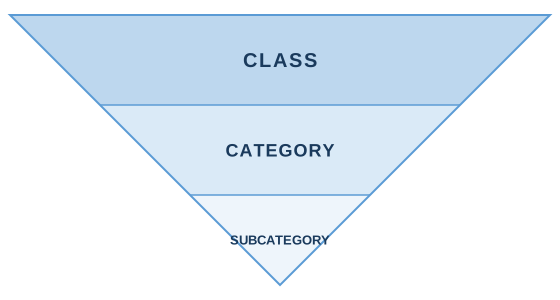
- Class — The broadest level, representing a general product classification.
- Category — A more specific group within the Class, narrowing down the product type.
- Subcategory — The most specific level, identifying the exact type of product within the Category.
2. Company Structure Pyramid (Company and Brand)
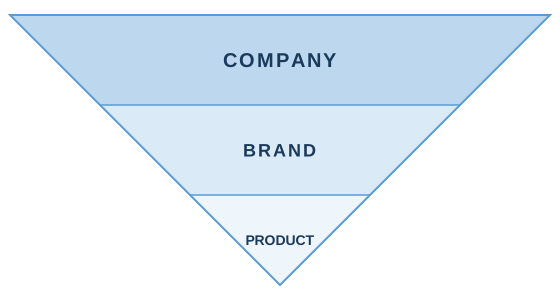
- Company — The parent company or organization behind the brand.
- Brand — The specific brand under the company.
- Product — The actual product within the brand.
Together, these two pyramids provide a complete picture of any product in the system — what it is and where it comes from.
Example
Tide Liquid Detergent would be classified as follows:
| Level | Value |
|---|---|
| Class | Household Goods |
| Category | Household Needs: Laundry Products |
| Subcategory | Liquid Laundry Detergent |
| Company | Procter & Gamble Company, The |
| Brand | Tide Brand |
| Product | Tide Liquid Detergent |
Adease Taxonomy Guides
Select a class below to open its categorization guide. Each guide explains how to assign the correct Category and Subcategory to a product within that class.
Adding a New Product
Step-by-step guide for adding a new product to the Adease database from either the Ad Approval page or the Products page.